
A 1% Solution: Khan You Dig It?

I’ve been writing for nearly two years now on the rapacious advance of A.I. and what I believe will be a blitzkrieg that overwhelms the job market. I recently came across an opinion piece by Sal Khan that I thought made a lot of sense as one potential solution among what will require a spiderweb of solutions.
Khan is the founder of Khan Academy, an online learning platform that provides free education for 20 million people each year. I was introduced to him by an episode of the How I Built This podcast that remains one of my favorites. He’s quite a guy. Long on smarts and full of heart.
His guest essay for the New York Times is titled, “A 1 Percent Solution to the Looming A.I. job Apocalypse.” So, yes – someone beside me in the business world sees the dramatic graffiti spray painted on the wall of our immediate future. Except he’s closer to the A.I. fire than I’ll ever be and travels in the economic echelons where insider insights are truly gleaned.
I was encouraged by his solution – sparked by the example of a friend who is a CEO and has committed to the following practice, Khan believes every company benefiting from A.I. automation should donate 1% of their profits to help people learn new skills for new jobs.
He says that if the world’s twelve largest companies adopted this practice, it would create a $10 billion annual fund that could power an online skill training platform to help people acquire the skills required for the jobs of the future. This fund would be operated by an independent nonprofit.
Smart thinking, though I’d advise him that he might not have to reinvent the wheel, as a similar platform already exists – 1% for the Planet.
1% for the Planet business members commit 1% of their revenue – not just profits – to environmental nonprofits. While it isn’t a platform for job training, it supports plenty of jobs in the nonprofit world: 1% for the Planet members, which generally consist of small businesses, have contributed more than $800 million to nonprofits around the globe.
I’ve been a 1% for the Planet member for nearly a decade now. It is a top-notch organization with fantastic people and a process for vetting a nonprofits and verifying donations that demands proof, authenticity, and impact.
It will be interesting to see if anyone picks up Khan’s challenge to create this nonprofit platform, and I’d advise them to make 1% for the Planet their first stop for lessons learned. Heck, they might even collaborate with 1% for the Planet on jobs that address the challenges of climate change and other environmental issues.
The larger question is would companies commit this pledge with the public accounting to support it? Well – that’s another thing entirely. I’d imagine they’d need to feel some real heat from stakeholders to pursue this, not the least of which would have to come from their investors.
I’d love to see these mega corporations plant a more consequential stake in the ground by going beyond profits and committing 1% of revenues to this initiative as its bold work will require these types of financial resources.
I suppose I’d settle for 1% of profits to start. In the case of tech companies, a commitment of this magnitude would be one way to back up their benign and plastic “Making the world a better place” messaging that genuinely makes all of us want to 🤮.
Update: Economic Boycott
In response to last week's post – Where Have All The Cowboys Gone? – readers Patricia Shetley and Deirdre Cullen made me aware that the community of Minneapolis is calling for a day of "no work, no school, no shopping" this Friday, January 23, in response to the ICE killing there. Sharing it here in case you feel like joining in wherever you are.
The Concentration of Wealth
Are you part of the “905”?
Me neither.
It sounds like an area code, and if it were, it would be the wealthiest and yet least populated area code in America.
That’s because half of American wealth is owned by 905 people.
Abbey Lunney and Libby Rodney of the Harris Poll break it all down in a fascinating article about this country's billionaires.
2026 Predictions
Okay, I'm a little late on this year's predictions, but visions of the future don't roll in every day so you just have to go with it.
Google will slingshot past Open AI in the AI race.
AI company Anthropic will get acquired – by Google.
With generative AI advancing in Hollywood – consider AI-creations Tilly Norwood and Xania Monet raking in millions – a backlash will fuel a resounding comeback in live theater measured in butts in seats. Like Marvin Gaye and Tammi Terrell sang, "Ain't Nothing Like the Real Thing."
The Eyes Have It
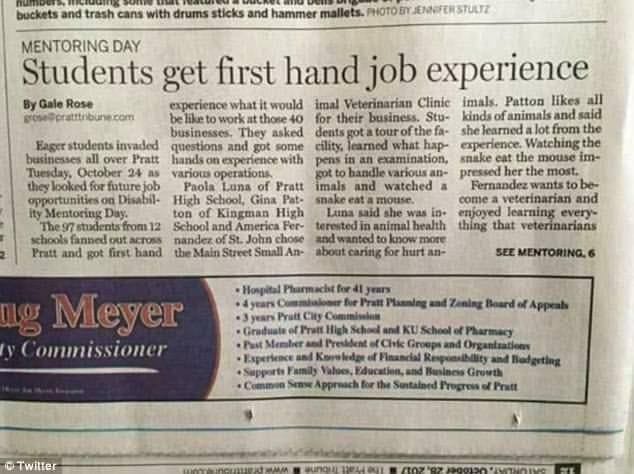
I started my "professional" career as a technical editor for an engineering firm. It reinforced what I'd learned in journalism classes – the value of an editor or, even more specifically, a "proofer," a set of diligent eyes to catch mistakes before they become airborne into a cost center or a public embarrassment.
Today, I offer two examples of how things can go astray if you don't pay attention to the process, whether that's the lack of a simple hyphen in a unit modifier or a printing detail that just doesn't quite match up.
Let's begin with "Mentoring Day."
And this one (below), surfaced by Stephanie Doyle on LinkedIn where she says, "Looks like someone doesn't know how to read a dieline."
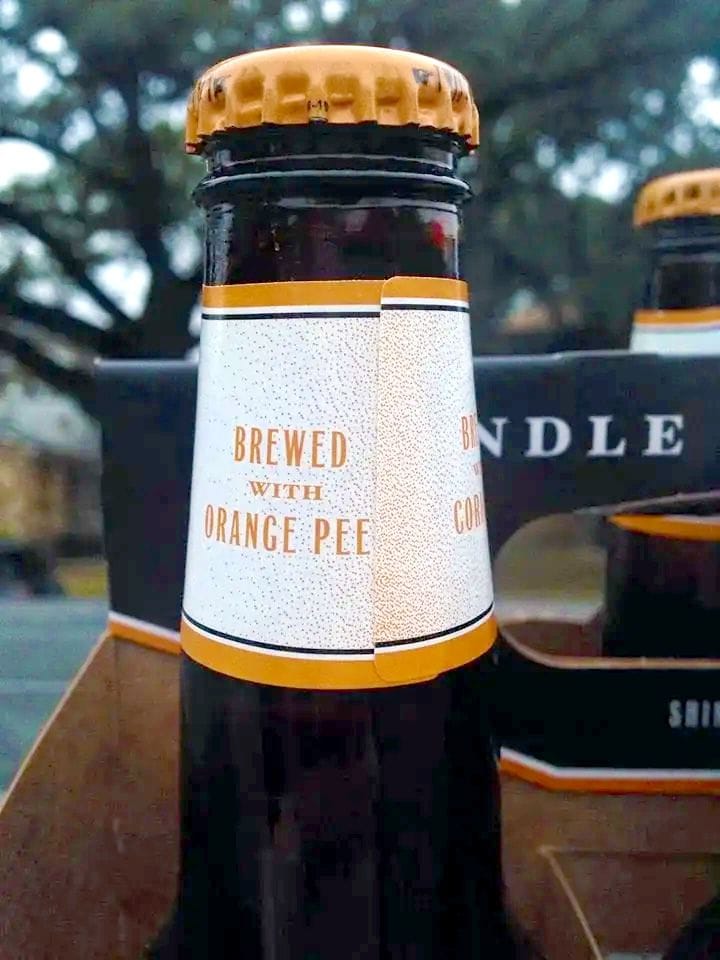
And lest you think me high and haughty, time for a true confession: I once sent a document to a client that read "Pubic Information Officer," regrettably missing an "L." 🤷♂️
Here's where I should tease you with next week's newsletter topic, pulled from a thoughtful content calendar. So, what will I write? I have no idea as of right now. That is how these weekly newsletters sometimes go.
Have any hot ideas?
Godspeed, friends.
Russ